
Massage vs Acupuncture: Which Is Better for Your Pain?
Quick Answer
Massage therapy and acupuncture are both effective, complementary treatments for pain, stress, and recovery, but they work differently and target different problems. Massage tends to work better for muscle aches and soft tissue injuries, while acupuncture is often preferred for nerve-related pain, such as sharp or stabbing sensations. Neither is universally better than the other. The right choice depends on your specific condition, your comfort level, and the results you're looking for.
What Is Massage Therapy?
Massage therapy is a hands-on treatment in which a trained therapist applies pressure, kneading, and stroking movements to the body's soft tissues, including muscles, tendons, fascia, and ligaments. It is one of the oldest healing practices in the world, with roots in ancient Egypt, Greece, China, and India.
Modern massage involves manipulating soft tissues to improve circulation, alleviate tension, and promote relaxation. Its techniques have evolved as practitioners refined their methods.
Today, massage therapy encompasses many styles, each suited to different needs:
Swedish massage uses long, gentle strokes and is ideal for general relaxation and stress relief. Deep tissue massage applies firm, slow pressure to reach deeper muscle layers, making it well-suited for chronic pain and muscle knots. Sports massagefocuses on injury prevention and athletic recovery. Trigger point therapy targets specific tight areas within muscle tissue that refer pain to other parts of the body. Prenatal massage is adapted to the physical changes of pregnancy.
Sessions are typically performed on a massage table, with the client draped in a sheet or towel for comfort.
What Is Acupuncture?
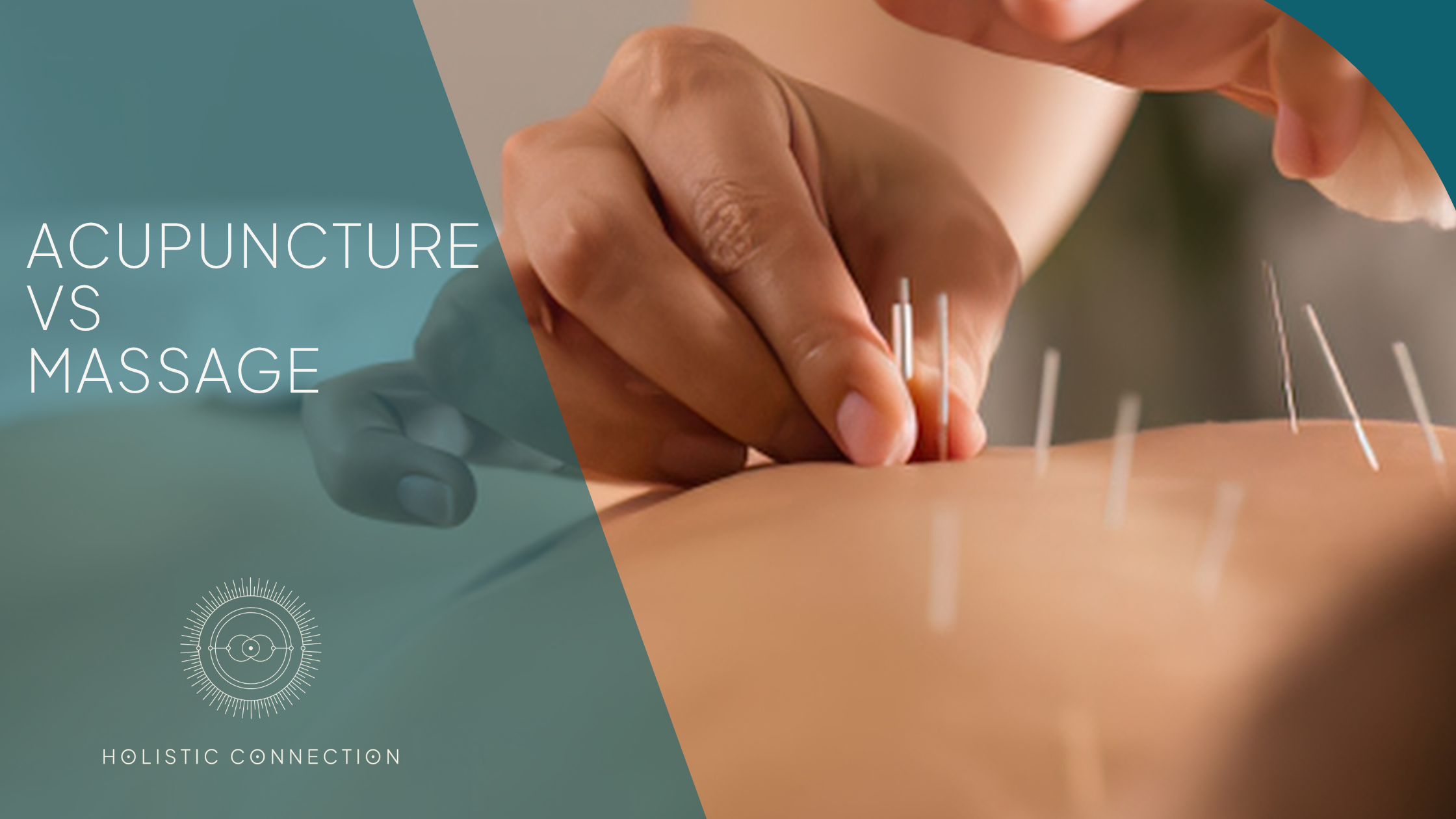
Acupuncture is a practice rooted in Traditional Chinese Medicine (TCM) that involves inserting thin, sterile needles into specific points on the body, known as acupoints, along pathways called meridians. Acupuncture originated in China over 2,000 years ago, based on the principle that the body contains a life force called "Qi" that flows through distinct pathways known as meridians. By inserting needles at these points, acupuncturists seek to influence the flow of Qi.
In a modern clinical context, acupuncture is also understood through a biomedical lens: the needles are thought to stimulate the nervous system, trigger endorphin release, influence blood flow, and reduce inflammation. This dual framework, both traditional and biomedical, is part of why acupuncture has gained mainstream medical acceptance in recent decades.
The needles used are extremely fine, typically as thin as a strand of hair. Most people feel little to no pain during insertion. A session usually involves 10–20 needles left in place for 20–30 minutes.
How Each Therapy Actually Works
Understanding the mechanism behind each therapy helps you make a more informed decision.
How massage works
When a therapist applies pressure and movement to soft tissue, several physiological responses occur. Muscle tension releases. Blood flow increases, delivering oxygen and nutrients to tissues and helping clear metabolic waste. The nervous system shifts toward its parasympathetic, or "rest and digest," state. Endorphins, the body's natural pain-relieving chemicals, are released. The rhythmic kneading and stroking actions release muscular tension and promote endorphin production. Massage also increases blood flow, which helps eliminate toxins and improve overall circulation, creating a sense of calm.
How acupuncture works
Both acupuncture and massage operate on a similar principle: the body heals more effectively when there is a smooth flow of blood and energy. Massage generally promotes this flow across the body, while acupuncture can target specific points with greater precision. Acupuncture uses designated points to address blockages, support the body's natural healing response, or enhance resource production in areas of need.
From a biomedical perspective, needling stimulates nerve fibres, which send signals to the brain and spinal cord. This triggers the release of endorphins, serotonin, and other neurochemicals. Studies suggest acupuncture also modulates the autonomic nervous system and reduces inflammatory markers in certain conditions.
Continue Reading: Does Acupuncture Help
What Each Therapy Is Best For
A common and useful guideline is to match the therapy to the type of pain or symptom you're experiencing.
Choose a massage when
Your primary issue is muscle tension, tightness, or knots
You've had a soft tissue injury, such as a strained muscle or overuse injury
You want immediate physical relaxation
You're managing stress or general anxiety
You're an athlete looking for faster recovery
You want improved flexibility and range of motion
Choose acupuncture when:
Your pain is sharp, stabbing, or nerve-related
You're dealing with a chronic condition that hasn't responded well to massage alone
You're managing stress-related conditions such as anxiety, insomnia, or tension headaches, or chronic pain conditions such as arthritis, migraines, and fibromyalgia.
You're interested in a more systemic or whole-body approach to healing
You want to address digestive issues, hormonal imbalances, or other internal conditions alongside pain
Massage vs Acupuncture for Specific Conditions
Back Pain
Research suggests that massage is an effective treatment for persistent back pain, with clinical benefits comparable to other commonly used therapies. Studies also indicate that acupuncture is more effective in improving pain than no treatment in patients with chronic low back pain. In practice, both therapies show meaningful benefits for back pain. The distinction often comes down to the cause: muscular tightness tends to respond well to massage, while chronic, nerve-influenced pain may respond better to acupuncture.
Neck Pain
A systematic review found that massage was comparable to acupuncture in terms of neck pain outcomes. For neck pain, the choice between the two may come down to personal preference, availability, and whether the pain has a primarily muscular or neurological component.
Migraines and Headaches
Acupuncture has a stronger evidence base for migraine prevention. Regular sessions have been shown to reduce the frequency and intensity of migraine episodes. Acupuncture helps balance the body's energy and provides a deeper sense of calm, which is relevant to nervous system conditions, such as migraines.
Anxiety and Stress
Both therapies effectively reduce stress. Massage provides immediate physical relaxation and is particularly good at reducing the bodily symptoms of stress, such as tight shoulders and shallow breathing. Massage provides immediate physical relaxation and tension release, while acupuncture works on a deeper level, balancing the nervous system and reducing the stress response over time. Combining both offers the most comprehensive stress relief.
Digestive Issues
Abdominal massage may help with digestive health, but it is not a practical approach for treating chronic conditions such as IBS or constipation. Acupuncture, with its holistic diagnostic approach, is better suited to address these issues.
What Does Each Session Feel Like?
A massage session: Most sessions begin with a brief intake conversation about your current concerns, health history, and pressure preferences. You'll undress to your comfort level and lie on a padded table, covered with a sheet. The therapist works through your areas of concern using hands, forearms, or elbows, depending on the technique. Sessions typically last 60 to 90 minutes. You should feel relaxed during and after, though deeper work like deep tissue massage can produce some tenderness the following day.
An acupuncture session: An acupuncturist evaluates your pulse, examines your tongue, and asks specific questions to identify the underlying cause of your condition. This personalized diagnostic approach ensures treatments are tailored to individual needs. Needles are then inserted at strategic points, often not directly over the pain. Most people describe a mild tingling, warmth, or heaviness around the needle. You'll rest with the needles in place for about 20–30 minutes. Sessions typically run 45–60 minutes, including the intake and needle placement.
How Many Sessions Will You Need?
There is no universal answer, because treatment length depends on your condition, how long you've had it, and how your body responds.
For massage: Acute issues, such as a strained muscle, may resolve with one to three sessions. Chronic tension or ongoing stress management is often addressed with monthly or bi-weekly maintenance sessions. Athletes in active training may benefit from weekly sessions during peak periods.
For acupuncture, Chronic conditions generally require more sessions before noticeable improvement. One study found that an effective treatment schedule for chronic pain was at least two weekly acupuncture sessions for 6 to 12 weeks. Acute pain usually requires fewer sessions. After an initial treatment phase, many people transition to monthly maintenance visits.
A general rule of thumb: if you haven't noticed any improvement after four to six sessions of either therapy, it's worth reassessing with your practitioner or exploring whether a different approach, or a combination of both, might serve you better.
Insurance Coverage: What's Actually Covered?
Insurance coverage for both therapies is inconsistent but improving.
Massage therapy: Coverage varies considerably by plan. Massage therapy is sometimes covered by health insurance, depending on your state. Generally, a doctor's order or prescription is required to access insurance benefits. Some plans cover massage when it is deemed medically necessary and prescribed by a physician, particularly for injury recovery or chronic pain. Auto insurance may also cover massage as part of a treatment plan following a vehicle accident. Notably, Medicare does not cover massage therapy, though some Medicare Advantage plans may include it as an added benefit.
Acupuncture: Coverage has expanded significantly in recent years. Medicare covers up to 12 acupuncture treatments in 90 days for chronic low back pain. If the patient shows improvement, Medicare covers an additional 8 sessions, for a maximum of 20 treatments in 12 months. Many private insurers, including Aetna, have added acupuncture as a covered benefit for specific conditions such as chronic neck pain, headaches, and osteoarthritis-related pain. Coverage details, deductibles, and co-pays vary by plan, so always verify with your insurer before booking.
A practical tip: Both massage and acupuncture are generally eligible expenses under HSA (Health Savings Account) and FSA (Flexible Spending Account) plans when prescribed by a licensed provider. This can result in meaningful savings, since these accounts use pre-tax dollars.
Can You Use Both Together?
Yes, and many practitioners actively recommend it.
Massage releases physical tension in muscles and fascia, improves circulation, and promotes relaxation. Acupuncture then works more effectively on a relaxed body, accessing energy pathways, reducing inflammation, and stimulating natural healing. Together, they address pain and tension from multiple angles, often achieving results that neither can accomplish alone.
A common sequencing approach is to receive massage first, which loosens the muscles and makes the body more receptive to needling, followed by acupuncture. Some practitioners offer both in the same visit. Others prefer to separate the sessions to allow the body to fully integrate each treatment.
Combining both therapies can lead to better sleep quality, boosted immune function, reduced stress, and a more holistic approach to physical and energetic health.
If you're dealing with a complex or chronic condition, it's worth discussing an integrated approach with practitioners who are familiar with both modalities.
What About Dry Needling? (And Why It's Different)
Dry needling is often confused with acupuncture because both involve inserting thin needles into the body. However, they are distinct practices with different training requirements, philosophies, and applications.
Dry needling is typically performed by physical therapists, chiropractors, or other licensed clinicians. It targets myofascial trigger points, which are tight, irritable spots within a muscle that cause localized or referred pain. The goal is to release muscle tension and improve function in a specific area. It is grounded in Western anatomy and physiology.
Acupuncture, by contrast, is based on TCM principles and addresses a broader range of health conditions beyond musculoskeletal pain. Licensed acupuncturists complete dedicated degree programs (typically a master's or doctoral level) in acupuncture and Oriental medicine.
While both involve inserting needles into the body, dry needling focuses on treating muscle pain through trigger points. It is typically performed by physical therapists, while acupuncture is based on Traditional Chinese Medicine principles and addresses a broader range of health issues. Training requirements differ, and insurance coverage varies between the two treatments.
If you're specifically dealing with a localized trigger point or a muscle-focused injury, dry needling may be the more targeted option. If you're seeking a broader therapeutic approach, a
Who Should Avoid Each Therapy?
Both therapies are generally safe for most people, but there are important exceptions.
Avoid or modify massage if you have:
Active skin infections, rashes, or open wounds in the treatment area
Blood clots or a history of deep vein thrombosis
Severe osteoporosis (deep pressure should be avoided)
Certain cardiovascular conditions (consult your doctor first)
Cancer (massage can still be beneficial in many cases, but a qualified oncology massage therapist is recommended)
During pregnancy, always seek a therapist trained in prenatal massage
Avoid or modify acupuncture if you have:
A bleeding disorder or are taking blood-thinning medications (consult your doctor first)
A pacemaker (electrical stimulation techniques used in some acupuncture sessions are contraindicated)
A needle phobia or severe anxiety about needles
A compromised immune system (discuss risks with both your doctor and acupuncturist)
Adverse effects of acupuncture are generally only minor, including soreness or pain at the needle site, minor bleeding, dizziness, or headache. Researchers conclude it is a relatively safe procedure when performed by a qualified practitioner.
For massage, temporary soreness after a deep tissue session is common and usually resolves within a day or two. Serious adverse events from properly administered massage are rare.
When in doubt about either therapy, discuss it with your primary care provider before booking.
Ready to take the next step? If you're managing chronic pain, stress, or an injury, both massage therapy and acupuncture are evidence-supported options worth exploring. The best starting point is a conversation with a qualified practitioner who can assess your specific situation and recommend the most appropriate course of care. Book a consultation today and start building a treatment plan that works for your body.