
ELECTROACUPUNCTURE IN TORONTO
Pain Relief & Modern Acupuncture
Electroacupuncture combines the precision of traditional acupuncture with controlled electrical stimulation to treat chronic pain, accelerate injury recovery, and address neurological conditions. If you're dealing with persistent pain, limited mobility, or slow-healing injuries, this evidence-supported therapy offers a targeted approach that many patients find more effective than acupuncture alone.
What Is Electroacupuncture?
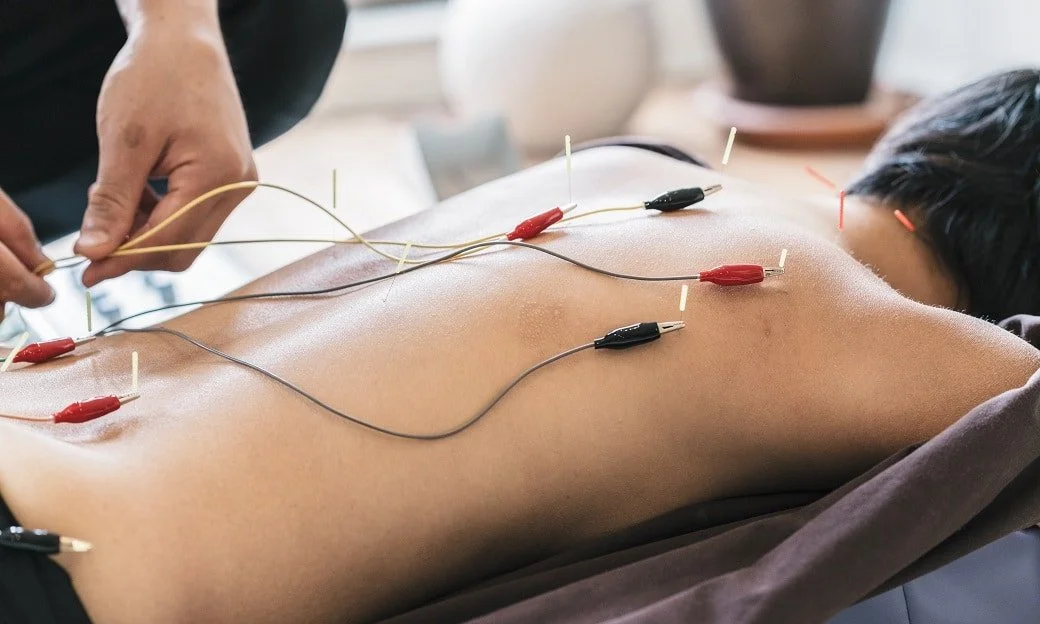
Electroacupuncture is an advanced form of acupuncture that applies a mild electrical current between pairs of acupuncture needles. After inserting fine, sterile needles at specific points on the body, your practitioner connects them to a device that delivers gentle, low-frequency pulses.
Electrical stimulation enhances the therapeutic effects of traditional needling by increasing nerve activation, improving blood flow, and triggering stronger pain-relieving responses. Unlike traditional acupuncture, which relies solely on needle placement and manual manipulation, electroacupuncture allows practitioners to control the intensity, frequency, and duration of stimulation to match your specific condition.
This technique has been used in clinical settings for decades and is supported by research showing improved outcomes for pain management, muscle recovery, and nerve function compared to standard acupuncture.
How Electroacupuncture Works
Once needles are inserted at targeted acupuncture points, small clips attach them to an electroacupuncture device. The device sends rhythmic electrical pulses through the needles, creating a sensation that most patients describe as a gentle tapping, pulsing, or tingling.
Neurological Activation
The electrical current stimulates sensory and motor nerves more intensely than manual needling, which can help override pain signals and promote the release of endorphins—your body's natural painkillers.
Muscle Tone Regulation
For conditions involving muscle spasm, tightness, or weakness, controlled pulses encourage muscle fibres to contract and relax rhythmically. This helps restore normal muscle tone and reduces trigger point sensitivity.
Improved Circulation
Electrical stimulation increases local blood flow to treated areas, delivering oxygen and nutrients while clearing metabolic waste. This is particularly beneficial for healing injuries, reducing inflammation, and addressing areas with poor circulation.
Autonomic Nervous System Reset
Electroacupuncture can influence the autonomic nervous system, helping shift the body from a stress-dominant state (sympathetic) to a rest-and-recovery state (parasympathetic). This is valuable for patients dealing with chronic stress, sleep disturbances, or digestive issues.
Benefits and Conditions Treated
Electroacupuncture has been studied for a wide range of conditions, with the strongest evidence supporting its use for pain relief, musculoskeletal injuries, and nerve-related disorders.
Chronic Pain & Arthritis
Osteoarthritis and rheumatoid arthritis
Chronic low back pain
Neck pain and tension headaches
Fibromyalgia
Sciatica
Research shows that electroacupuncture can reduce pain intensity and improve function in patients with chronic musculoskeletal conditions, often with fewer side effects than medications.
Sports Injuries & Rehabilitation
Muscle strains and ligament sprains
Tendonitis (elbow, shoulder, Achilles)
Plantar fasciitis
Frozen shoulder
Post-surgical rehabilitation
Delayed-onset muscle soreness
Athletes and active individuals use electroacupuncture to accelerate recovery, reduce inflammation, and restore range of motion after acute injuries.
Neurological Disorders
Peripheral neuropathy
Bell's palsy (facial paralysis)
Post-stroke rehabilitation
Carpal tunnel syndrome
Tinnitus
Electrical stimulation can help regenerate nerve function and improve symptoms in conditions where nerve pathways are damaged or disrupted.
Women's Health & Digestive Issues
Menstrual pain and irregularities
Nausea and chemotherapy-induced vomiting
Irritable bowel syndrome
Stress-related digestive complaints
Electroacupuncture's ability to modulate the autonomic nervous system makes it effective for conditions involving hormonal balance and digestive function.
Our Practitioners
-

Peter Zhao
Registered Acupuncturist
Electroacupuncture vs. Traditional Acupuncture & Dry Needling
Traditional Acupuncture uses needle insertion and manual manipulation (twisting or lifting) to stimulate acupuncture points. It's effective for many conditions but relies on the practitioner's manual technique and may produce milder stimulation.
Electroacupuncture adds consistent, measurable electrical stimulation. This allows for stronger nerve activation, more precise control over treatment intensity, and better outcomes for pain and muscle-related conditions. Sessions can be standardized and adjusted based on your tolerance and response.
Dry Needling targets myofascial trigger points (muscle knots) without following traditional acupuncture point maps. While it can help release tight muscles, it typically doesn't include electrical stimulation or the broader systemic effects of acupuncture.
Electroacupuncture offers the precision of acupuncture point selection with the enhanced therapeutic power of electrical stimulation, making it a versatile option for complex or stubborn conditions.
What to Expect During a Session
Initial Assessment
Your first appointment begins with a health history review and physical assessment. Your practitioner will ask about your symptoms, past treatments, and overall health to design a treatment plan tailored to your needs.
Needle Insertion
Fine, sterile acupuncture needles are inserted at specific points related to your condition. Most patients feel minimal discomfort during insertion—often described as a brief pinch or pressure.
Electrical Stimulation
Once needles are in place, small clips connect pairs of needles to the electroacupuncture device. You'll feel a gentle pulsing, tapping, or tingling sensation. Your practitioner will adjust the intensity to a comfortable level—strong enough to be therapeutic but not painful.
Relaxation Phase
You'll rest quietly for 15 to 30 minutes while the treatment works. Many patients find the sensation relaxing and may even fall asleep.
Post-Treatment
After needles are removed, you may feel immediate relief, increased energy, or mild fatigue. Some soreness or heaviness in treated areas is normal and typically resolves within 24 hours.
Treatment Frequency
Most patients start with one to two sessions per week. Acute conditions may improve within a few sessions, while chronic issues often require ongoing treatment over several weeks. Your practitioner will adjust frequency based on your progress.
FAQ
-
Research supports electroacupuncture's effectiveness for specific conditions, particularly chronic pain, osteoarthritis, and post-operative nausea. Multiple systematic reviews have found that electroacupuncture produces measurable improvements in pain scores and function compared to no treatment or sham acupuncture.
Individual results vary, but many patients experience significant relief, especially when combined with other evidence-based therapies. The electrical stimulation allows for more consistent nerve activation than manual techniques alone, which may explain why some conditions respond better to electroacupuncture than traditional acupuncture.
-
Traditional acupuncture uses needle insertion and manual manipulation, such as twisting, lifting, or rotating, to stimulate specific points.
Electroacupuncture adds a controlled electrical current between pairs of needles, creating rhythmic pulses that enhance nerve stimulation. The electrical component allows practitioners to deliver consistent, measurable stimulation and adjust intensity, frequency, and duration to match your condition.
While both approaches work through similar mechanisms, electroacupuncture typically produces stronger effects for pain, muscle spasm, and nerve-related conditions.
-
It depends on your condition. Acute injuries may respond in 3 to 6 sessions, while chronic pain often requires 8 to 12 sessions or ongoing maintenance. Your practitioner will provide a personalized treatment plan after your initial assessment.
-
A typical electroacupuncture session lasts 15 to 30 minutes once the needles are connected to the electrical device.
Your total appointment time usually runs 45 to 60 minutes for the first visit and 30 to 45 minutes for follow-up sessions. This includes initial assessment, needle insertion, treatment, and post-treatment discussion.
The effects of treatment can last anywhere from a few days to several weeks, depending on your condition and how your body responds. Chronic conditions typically require ongoing sessions to maintain results.
-
TENS (transcutaneous electrical nerve stimulation) and electroacupuncture both use electrical current to relieve pain, but they work differently.
TENS applies current through surface electrodes on the skin. Electroacupuncture delivers current directly through acupuncture needles inserted at specific points.
Because electroacupuncture penetrates deeper into tissue and targets specific nerve pathways, it often produces stronger, longer-lasting effects for musculoskeletal and nerve pain. TENS is better suited for self-managed, superficial pain relief and can be used at home.
Many patients benefit from both. TENS is effective for daily management, while electroacupuncture provides stronger therapeutic effects.
-
Yes. Many patients combine electroacupuncture with physiotherapy, chiropractic care, massage, or conventional medical treatment. It can enhance the effectiveness of other therapies and reduce reliance on pain medication.
-
Electroacupuncture is very safe when performed by a licensed practitioner.
The most common risks are minor and temporary: slight bruising at needle sites, muscle soreness lasting 24 to 48 hours, or brief lightheadedness. Serious complications like infection or nerve damage are extremely rare with proper technique and sterile needles.
The main safety concern is contraindications. Electroacupuncture should never be used on patients with pacemakers, during pregnancy (in certain areas), or in people with active seizure disorders. Your practitioner will screen for these conditions before treatment.
-
Coverage varies by provider and plan. Many extended health insurance plans in Ontario cover acupuncture when provided by a licensed practitioner. Check with your insurer for details on your coverage limits and requirements.
-
Wear loose, comfortable clothing that allows easy access to treatment areas (arms, legs, back). You may be asked to remove certain clothing or change into a gown depending on the areas being treated.
Book Your Electroacupuncture Session
If you're ready to explore whether electroacupuncture can help with your pain, injury, or chronic condition, contact us to schedule a consultation. We'll assess your needs, explain your treatment options, and create a plan designed around your goals.